Tokenization: Why Your Text Needs to Become Numbers
So you've probably been wondering how these language models actually "read" text? Like, you know computers work with binary and numbers, but somehow GPTs can understand your essay about why you hate data structures class.
The answer is tokenization, and honestly, it's simpler than most profs make it sound.
Here's the Deal
Imagine you're trying to teach a computer to read, but the computer is basically a really fast calculator. It can't look at the letter 'A' and think "oh, that's the first letter of the alphabet." It needs everything converted to numbers first.
But you can't just assign A=1, B=2, etc. Because then "cat" would become [3,1,20], and "act" would become [1,3,20]. The computer would have no idea these words are related, even though they use the same letters.
The Smart Solution
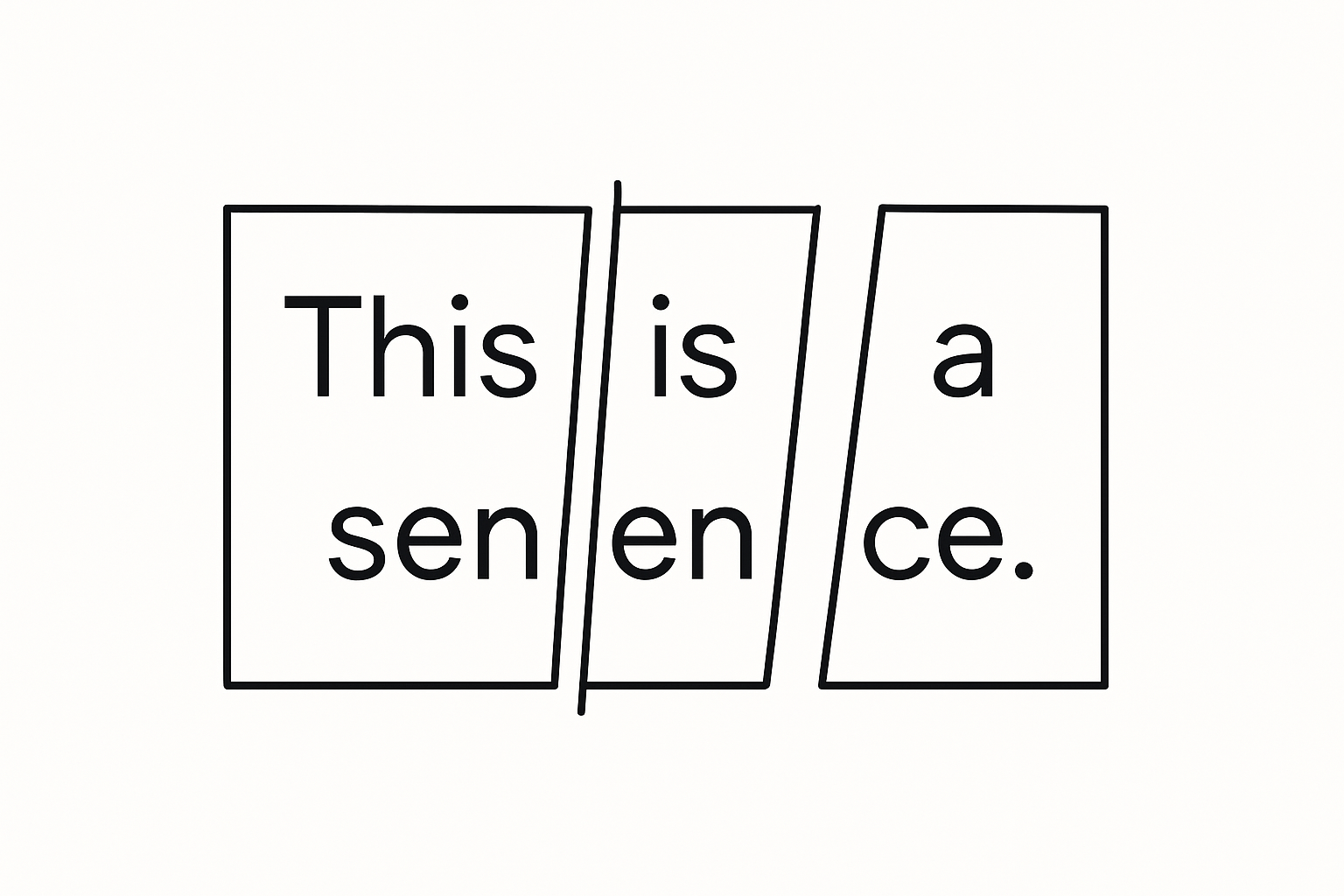
Instead of converting individual characters, we break text into chunks that actually mean something. Sometimes that's whole words, sometimes it's parts of words, sometimes it's punctuation.
Like if I type "I'm studying tokenization", it might get split into:
"I" (whole word)
"'m" (contraction part)
" studying" (word with space)
" token" (word fragment)
"ization" (suffix)
Each chunk gets assigned a number, and boom - now the computer can work with it.
Why Not Just Use Whole Words?
Good question. I thought the same thing at first. But think about it - English has hundreds of thousands of words, plus people are constantly making up new ones (especially on social media). You'd need a massive lookup table.
Plus what happens when someone types "supercalifragilisticexpialidocious" and makes a typo? The system would just crash.
The Algorithm Behind It
Most modern systems use something called Byte Pair Encoding. Don't let the name scare you - it's actually pretty straightforward:
Start with a bunch of text (like, millions of books and websites)
Count how often every pair of characters appears together
Take the most common pair and merge it into one unit
Repeat until you have about 50,000 different units
So if "th" appears together constantly, it becomes one token. If "ing" shows up everywhere, that becomes a token too.
Real Talk: Why This Matters for You
When you're building stuff with these APIs, understanding tokens isn't just academic - it affects your wallet. OpenAI charges by token, not by word. A sentence like "antidisestablishmentarianism" might cost more than "big long word" even though they mean roughly the same thing.
Also, these models have token limits. GPT-3.5 can handle about 4,000 tokens at once. That's not 4,000 words - it's usually less, depending on how your text gets split up.
The Weird Edge Cases
Here's where it gets interesting. Different languages tokenize differently. English is pretty efficient, but languages like Chinese or Arabic might use way more tokens for the same meaning.
And sometimes the tokenizer does weird things. Like it might split "basketball" into "basket" and "ball", which makes sense. But it might also split "neighborhood" into "neighbor" and "hood", which... well, that could be confusing in certain contexts.
From a Developer Perspective
When you're actually using these models, you'll probably use libraries that handle tokenization for you. But knowing what's happening helps you debug weird behavior.
Like why does the model seem to "forget" things you mentioned earlier in a long conversation? Probably because you hit the token limit. Or why does it struggle with words it should know? Maybe those words got split into weird token combinations it hasn't seen much.
The Bottom Line
Tokenization is basically the preprocessing step that makes human language digestible for neural networks. It's not the most glamorous part of NLP, but it's essential. Think of it like parsing in compiler design - you can't build the abstract syntax tree until you've broken the source code into meaningful tokens first.
And honestly? Once you understand tokenization, a lot of the "magic" around language models starts making more sense. They're not really reading like humans do - they're processing sequences of numbers that happen to correspond to meaningful chunks of text.